

UZUN FITNESS / GYM GUIDE
Gym equipment guide: machines, free weights and setup
Find your way around the gym: dumbbells, benches, cable stations and lever machines. Learn what each type of equipment is for, what to check before an exercise and how to adjust the setup.
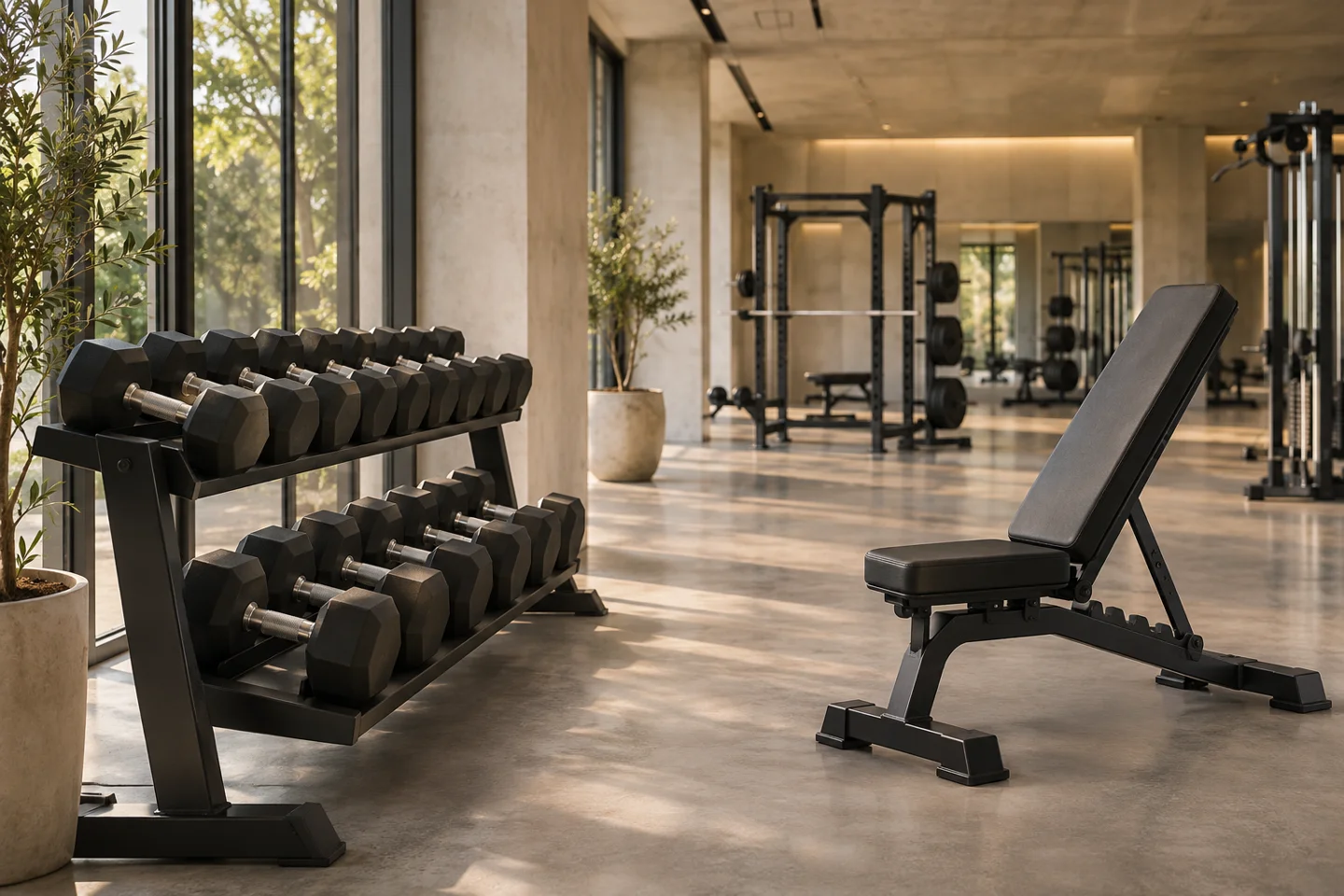
AI-created illustrations. Equipment design and settings in your gym may differ.
Your gym map: know your tools
Free weights let you choose the path. Machines guide or constrain it. Both can belong in your programme; a comfortable fit and controlled movement matter more than the size of the stack.
01 / Free weightsDumbbells & kettlebells
Useful for presses, rows, squats and carries. Fixed dumbbells have a set mass; adjustable versions use interchangeable plates.
Before you start: Check the grip, handle condition and adjustable-dumbbell locks. Start with a weight you can comfortably move into the starting position.
02 / Strength-zone essentialsBarbell & power rack
A bar and plates offer many loading options. A rack with safety supports helps organise squats and presses.
Before you start: Check the bar’s mass, secure the plates and set the safeties for the exercise. Ask a competent spotter for help with a challenging bench press.
03 / Support for your movementAdjustable bench
A flat or inclined support for presses, rows and other exercises. Backrest angle changes body position and exercise emphasis.
Before you start: Check stability and secure the seat and backrest. Not every bench offers decline settings; use only positions supported by the manufacturer.
04 / Choose the line of pullCable station / crossover
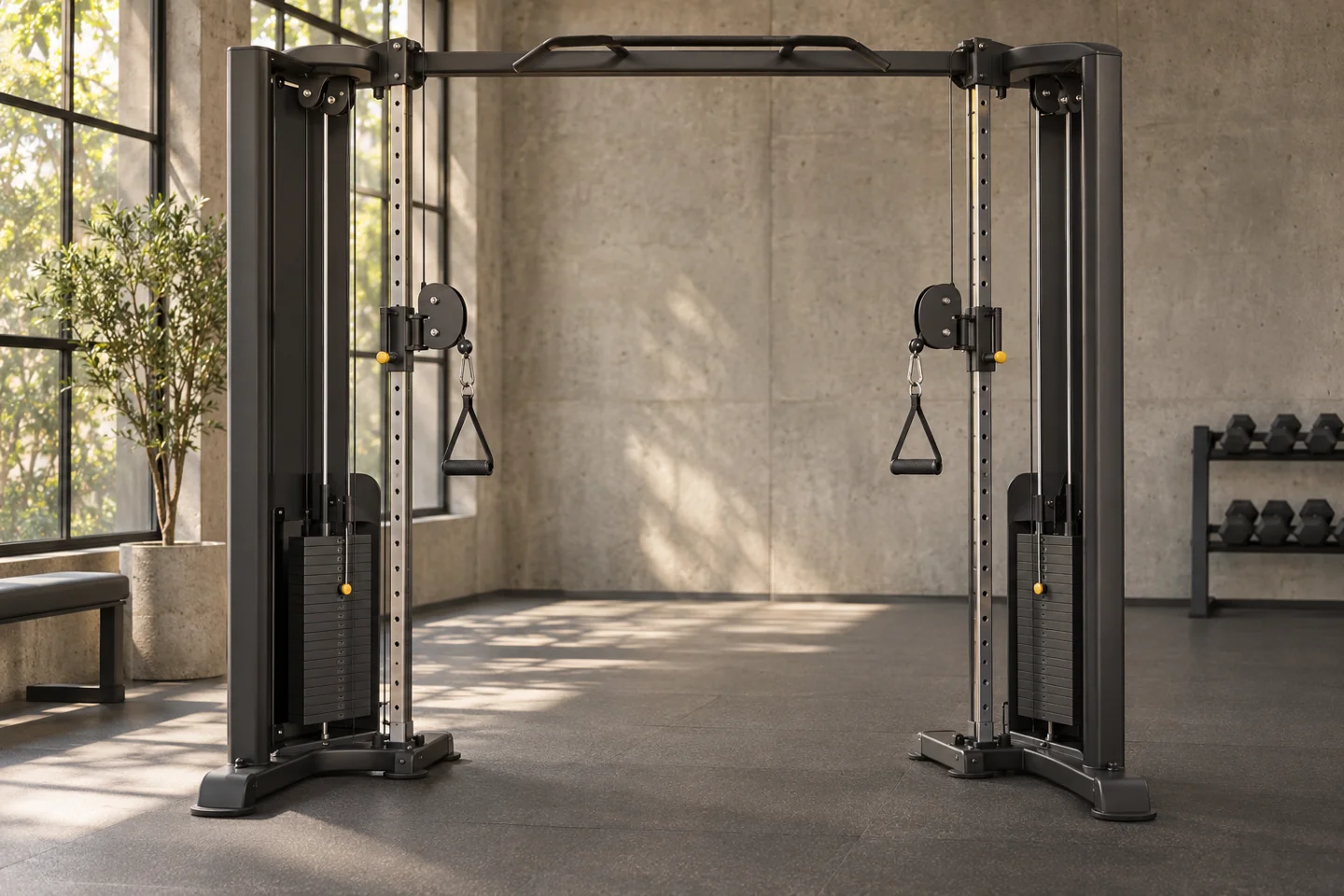
Pulleys let you change cable height and attach different handles for the back, chest, arms and lower body.
Before you start: Lock the carriage and check the carabiner and weight-selector pin. Adjust height with the cable unloaded; keep fingers clear of moving parts.
05 / A bar on guide railsSmith machine
The bar follows a fixed vertical or angled path. It can suit different exercises when your position fits the machine’s design.
Before you start: Learn the hooks and safety stops before the set. Bar mass and effective resistance vary by model; it is not a one-to-one substitute for a free barbell.
06 / Two ways to load resistanceSelectorised & plate-loaded machines
Selectorised machines use a pin in a weight stack; plate-loaded machines use plates on levers. This describes the loading system, not the athlete’s level.
Before you start: Set the seat and range using the model’s instructions. Never move a selector pin while the stack is lifted. Follow the manufacturer’s loading pattern on plate-loaded machines.
07 / Focus and supportPreacher bench & bodyweight stations
A preacher bench supports the upper arms during biceps curls. Pull-up bars, dip stations and assisted machines provide other training options.
Before you start: Adjust the pad so you do not have to reach or lift your shoulders. On assisted pull-up machines, more counterweight usually means more assistance — check the machine’s diagram.
08 / Move at your paceCardio & functional space
Treadmills, bikes, ellipticals and rowing machines offer different forms of aerobic work. Mats, bands and suspension trainers complement the strength zone.
Before you start: Locate the stop and emergency stop before starting a treadmill. Adjust the bike to fit you. Check bands and suspension straps for damage and secure anchoring.
Make the machine fit you
Save your seat and pad settings. Position numbers are useful only on the same equipment model.
Chest press
On a typical seated machine, handles sit around mid-chest, your back is supported and your feet are stable. Check the model’s instructions.
Lat pulldown / seated row
Adjust the thigh restraint or chest support, where fitted. Reach the handle without jerking or forced twisting.
Leg extension / leg curl
Use the model’s diagram to align its pivot with your knee and position the shin pad. Test a comfortable range with minimal resistance.
Leg press / hack squat
Set the backrest and stops. Choose a depth that preserves support and control rather than copying someone else’s range.
Weight is a setting, not a competition
There are no universal “men’s” or “women’s” dumbbells. Choose resistance for the exercise, your experience and movement control. Keep the first trial set easy, without jerking, swinging or rushing. Reduce the load if you have to change your technique to move it.
Numbers on different machines are not always comparable: levers, pulley ratios and counterweights affect resistance. Record the model, settings and load to track your own progress.
Your first-set checklist
- Read the machine’s diagram. If anything is unclear, ask a trainer to show you the start, movement and finish.
- Check the seat, backrest, locks, pins and safeties. Report frayed cables or unstable equipment to staff.
- Clear the space around you, warm up and perform an easy trial set.
- Move with control and breathe steadily. Stop for sharp pain, dizziness or unusual discomfort.
- Return the load safely, put plates and handles away and wipe contact surfaces.
Training at home?
Choose equipment for your plan and space: a mat, resistance band, dumbbells or a stable bench. Check rated capacity, clearance and anchoring requirements. “Home” and “commercial” do not define a universal 100 kg limit — use the specifications for the actual model.
Explore lessons by muscle group